

November 25, 2026
Pedro Sánchez’s coalition has been an exception to Europe’s reactionary turn. What went wrong?
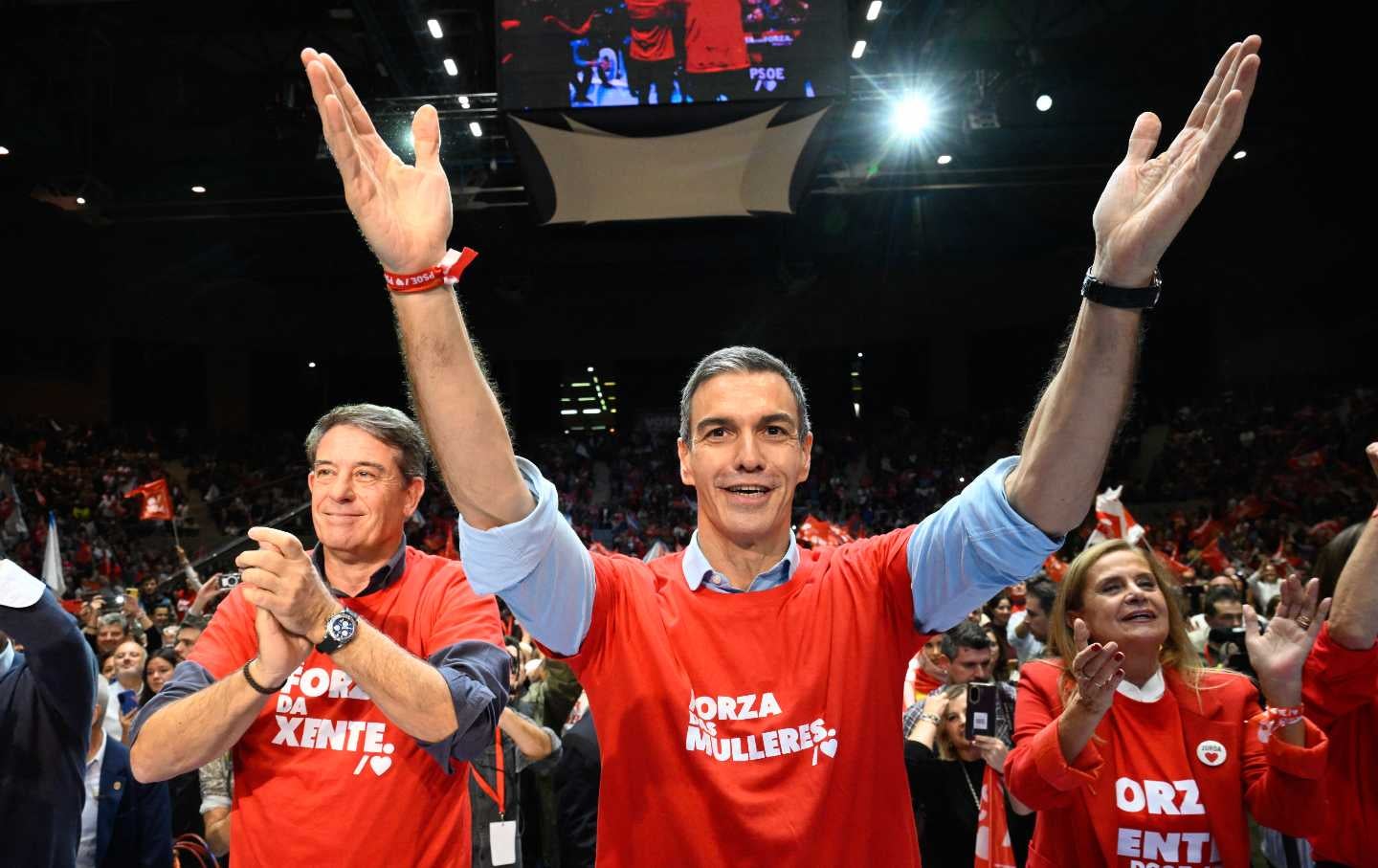
Spanish Prime Minister Pedro Sánchez reaps more successes abroad than in his own country. At least that is what the polls suggest, which foresee a joint victory for the right and far right in the November 29 general elections. If the forecasts hold, it will be the end of the coalition government formed by the Socialist Workers’ Party (PSOE) and the leftist coalition Sumar—which has aroused the admiration of progressive sectors around the world for its strong stance against Donald Trump and Benjamin Netanyahu, but has struggled to concretely improve the lives of the Spanish working class.
Spaniards’ main concern is the meteoric rise in housing prices, a surge the government has not been able to contain. Rents have risen 43 percent in a decade, and in large cities the cost of renting an apartment already amounts to 100 percent of the average income of a young person. The last years of coalition government have been a permanent tug-of-war between the PSOE—reluctant to regulate the housing market—and its Sumar partners, aligned with tenant unions that demand curbing speculation and a legal and effective price cap.
The housing crisis became a political crisis following the eviction of Maricarmen, an 87-year-old Madrid tenant expelled from her home by a real estate company. Her case gave a face to the more than 40 daily evictions, provoking a wave of social protests and an encampment in Madrid’s Puerta del Sol public square. Pushed by the mobilizations, the government presented two decrees aimed at protecting tenants and limiting real estate speculation, but Congress rejected them, leading Sánchez to call early elections. Tenant and workers’ unions called a general strike for November 11 for the right to housing, which partially halted Spain’s economic activity, with mass demonstrations all over the country. The protests for housing have placed the issue at the core of the electoral campaign, although the concrete state response to it will depend on the election results.
The current government has been more successful with labor, approving a labor reform in 2021 that strengthened the unions’ bargaining power and reduced temporary employment—a perennial scourge of the Spanish economy—from 25 to 15 percent of workers. The government has also approved successive increases in the legal minimum wage, which has gone from €858 gross per month in 2018 to €1,500 in 2026.
But the increase in wages is not enough to make ends meet, particularly in in large cities where rents have soared. In addition to housing, the prices of basic products such as food and clothing have risen: Inflation is above 4 percent. Consequently, the purchasing power of millions of workers is stagnant.
The elimination of tax exemptions and the drop in unemployment—at its lowest level since 2008—has increased the state resources, which has made it possible to finance new social policies such as the Minimum Vital Income. This is a minimum revenue scheme that intends to alleviate poverty, which remains at a rate of 25 percent despite the good macroeconomic figures. Bureaucratic obstacles are such that this benefit only reaches one in every five households in poverty, and its provisions are insufficient to offset the rise in rent. Another major policy achievement is the equalization of maternity and paternity leave at 16 weeks.
Current Issue

Pedro Sánchez came to power in 2018, amid the rise of the Spanish feminist movement, and women’s and LGBTQ rights became one of the coalition government’s banner issues. Their main advance was a law that strengthened the prevention of sexual violence and reformed the criminal code to clarify the definition of consent, in reaction to a history of sexist judicial rulings. They also managed to pass a law recognizing the right to gender self-determination without the need for psychiatric or medical reports.
Beyond the laws, the Spanish state has increased resources to fight gender-based violence through a state pact that allocated an extra €1 billion to prevent and combat violence against women.
As in the rest of Europe, the Spanish far right has turned immigration into its main electoral focus. But while the governments of the United Kingdom, France, or Germany have hardened their migration rules in a vain attempt to stop the rise of the far right, Sánchez’s government has opted for the opposite path, approving an extraordinary procedure to regularize the administrative status of hundreds of thousands of migrants. The decision was the response to a campaign led by migrant and anti-racist movements, which gathered more than 700,000 signatures in favor of regularization.
The number of immigrants in Spain increased by more than 2 million between 2021 and 2025, with the foreign-born population reaching 20 percent of the total. Sánchez remains favorable to immigration, for both ethical and utilitarian reasons, highlighting the benefit that it represents in an increasingly aging labor market. His rhetoric coexists with the reality of Spain’s immigrant detention centers, often criticized by human rights organizations, and with the daily police persecution of immigrants and racialized people. According to the NGO Sos Racisme, foreigners are three times more likely to be identified by the police than Spaniards.
Spain is one of the European countries most exposed to the effects of the climate crisis, as the deadly floods in Valencia in 2024 painfully underscored. In 2021 the Spanish Parliament approved a climate change law that envisions emissions neutrality by 2050, although it does not reach the ambition levels of the Paris Agreement. Spain’s great success has been the multiplication of wind and solar energy, which already generate more than half of the electricity produced in the country, which has allowed some reduction in greenhouse gas emissions. However, the decline stalled in 2025, largely due to the lack of decisive actions to electrify transport, and Spain is far from the 32 percent reduction committed for 2030.
Sánchez came to power thanks to a motion of no confidence against then-President Mariano Rajoy, due to his conservative Popular Party’s involvement in a corruption network. Therefore, the corruption conviction of Sánchez’s former deputy, José Luis Ábalos, and the charging of Santos Cerdán, another important PSOE leader, have dealt a hard blow to the president’s popularity.
Popular
“swipe left below to view more authors”Swipe →
There are other less straightforward cases—including charges against Sánchez’s wife and brother—that many commentators describe as examples of lawfare by a judicial elite close to the political right. The conviction of the coalition government’s attorney general for disclosure of secrets remains controversial. The legal doubts about these cases do not prevent them from casting a long shadow of doubt over the president’s honesty.
Sánchez has acquired a powerful international image thanks to his firm stand against Trump and Netanyahu. This stance responds to the Spanish population’s broad majority support for the Palestinian cause, which became visible when hundreds of demonstrators interrupted the Vuelta a España cycling race in 2025 to protest the participation of an Israeli team.
But Sánchez’s decisions on the international stage have not gone uncriticized. Although he announced an arms embargo against Israel, Spain has continued buying Israeli weapons. In a similar vein, Sánchez rejected Trump’s demand that NATO countries devote 5 percent of their GDP to defense, but Spanish military spending grew 50 percent in 2025, exceeding 2 percent of GDP.
Sánchez’s coalition government has been an exception to the reactionary turn in Western politics, in key areas such as immigration and opposition to the aggressive imperialism of Trump and Netanyahu. However, recognizing the example that he has represented for progressives around the world is compatible with pointing out the failure of his government to tackle the housing crisis and translate the good macroeconomic figures into an improvement in the living conditions of the Spanish working class. These will be the first challenges that the next government will face, regardless of its ideology.
More from The Nation
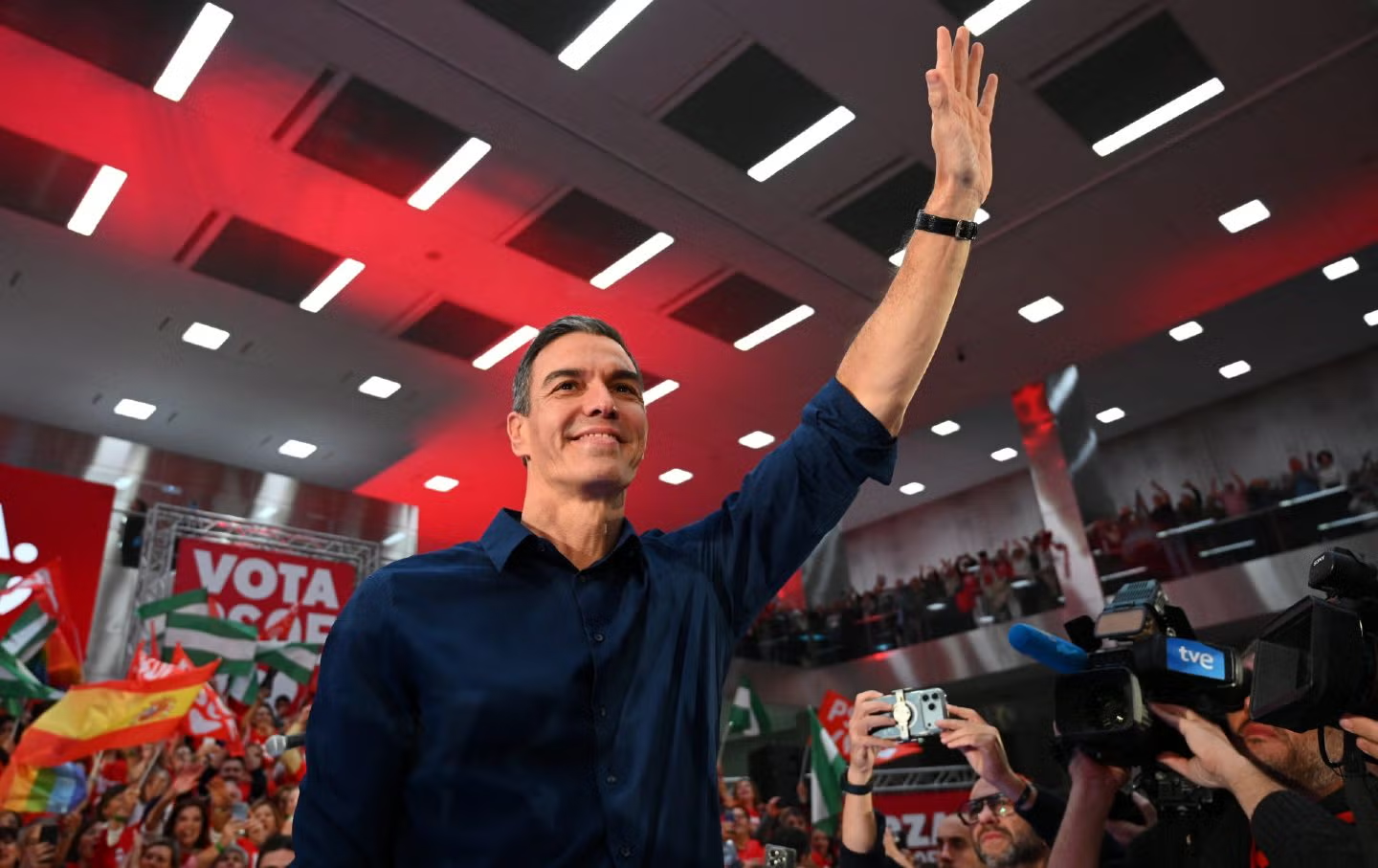
Spain’s progressive prime minister has defied political gravity over and over again. But this Sunday’s election might be his last act.

A growing group of US deportees is documenting their new, post-deportation lives on social media, revealing the human cost of our Kafkaesque immigration system.
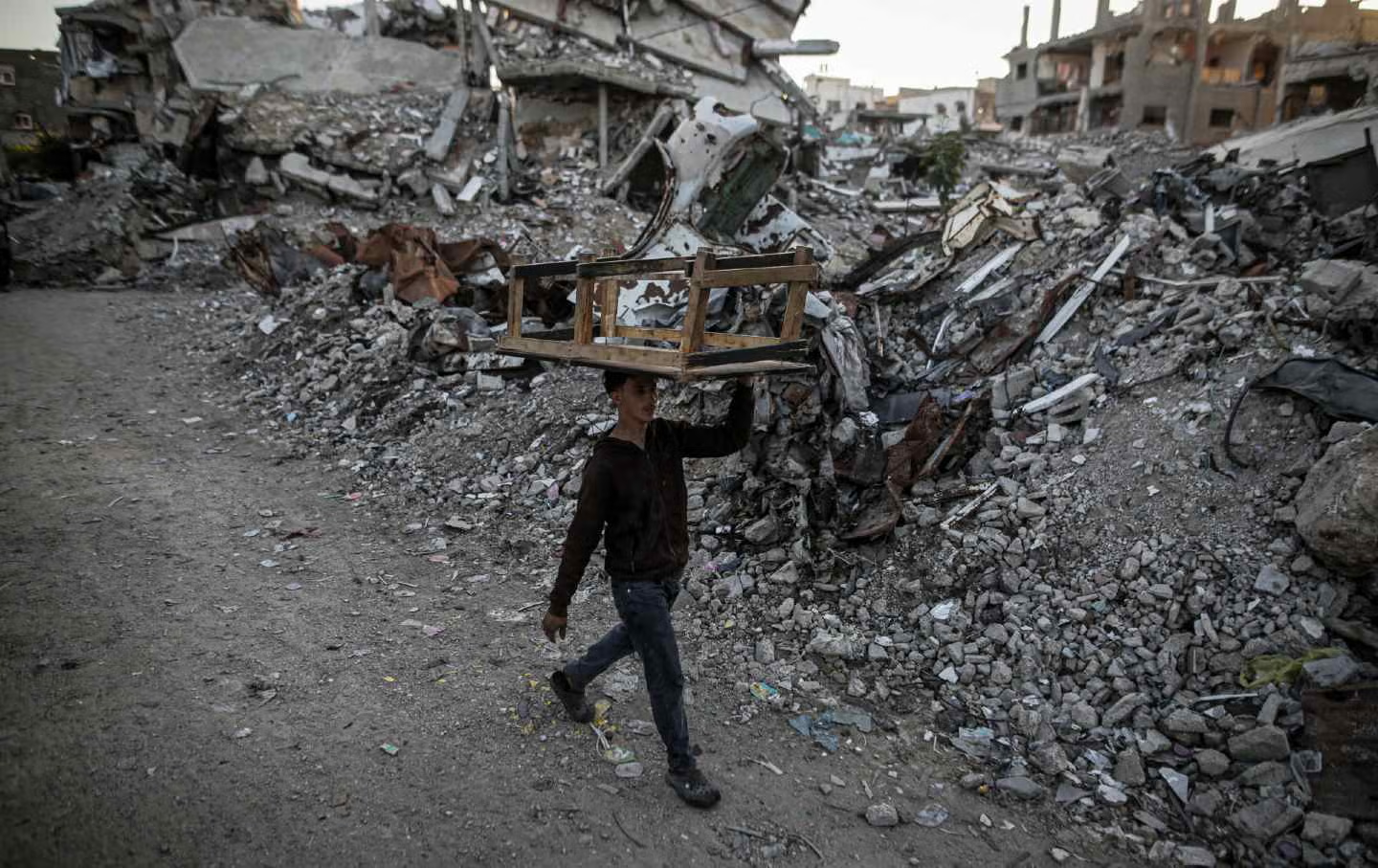
The Strip is buried under 61 million tons of rubble. Some people are finding creative ways to use it as a resource.
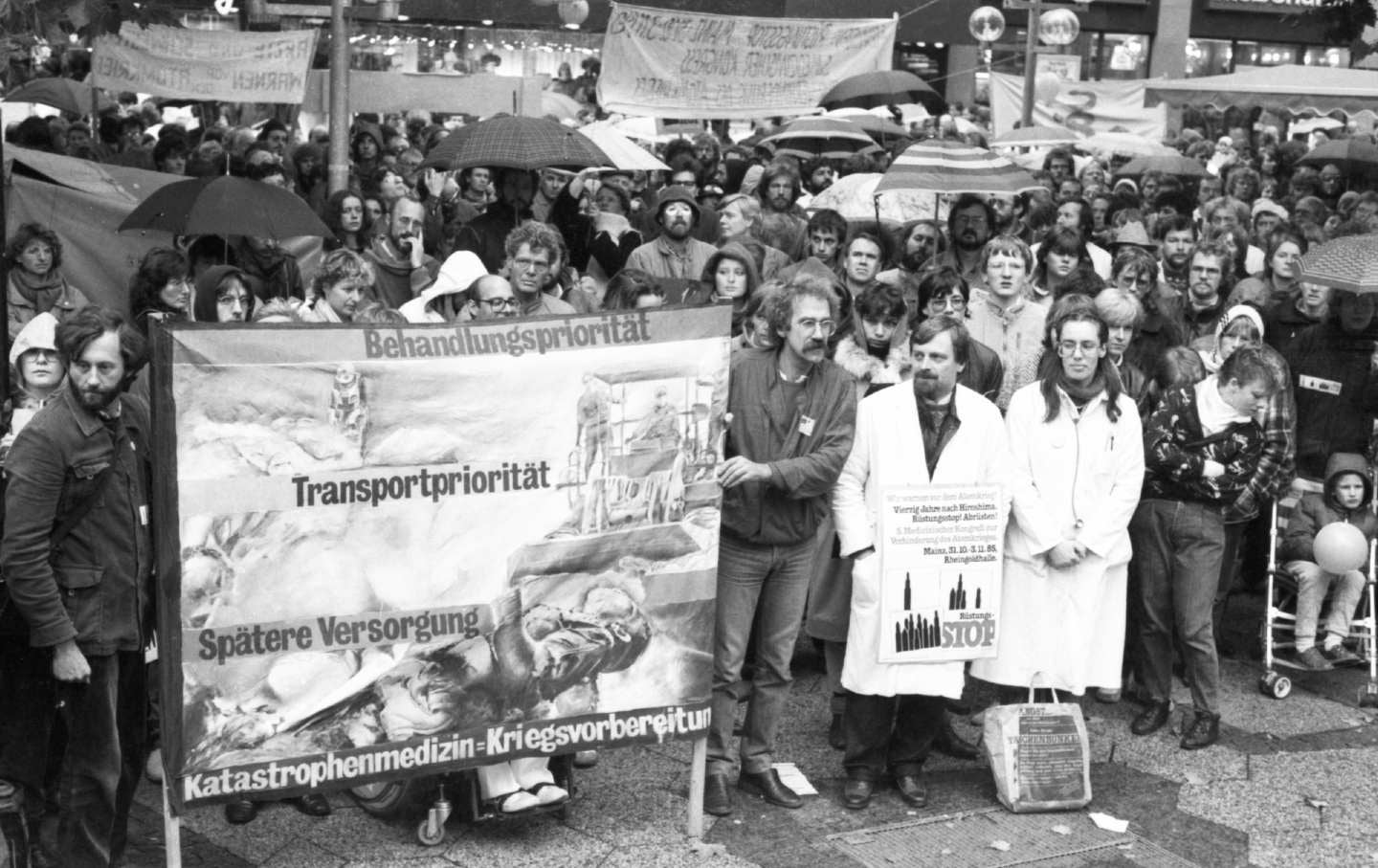
Doctors are calling for verifiable, deadline-driven agreement to eliminate all nuclear weapons. The flourishing—and even the survival—of the human species is at stake.
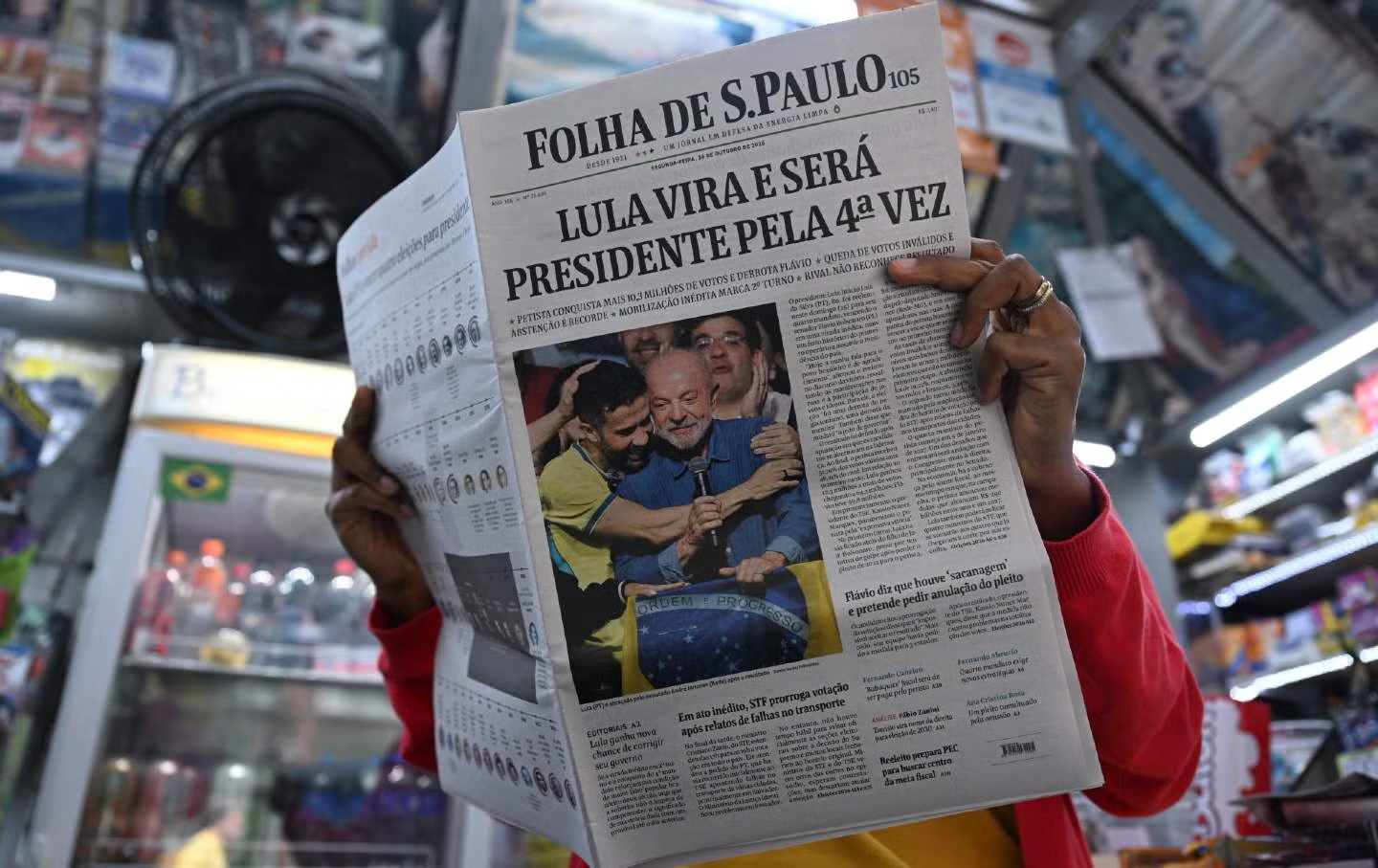
The Brazilian president looked headed for defeat. The Brazilian people had other ideas.
