

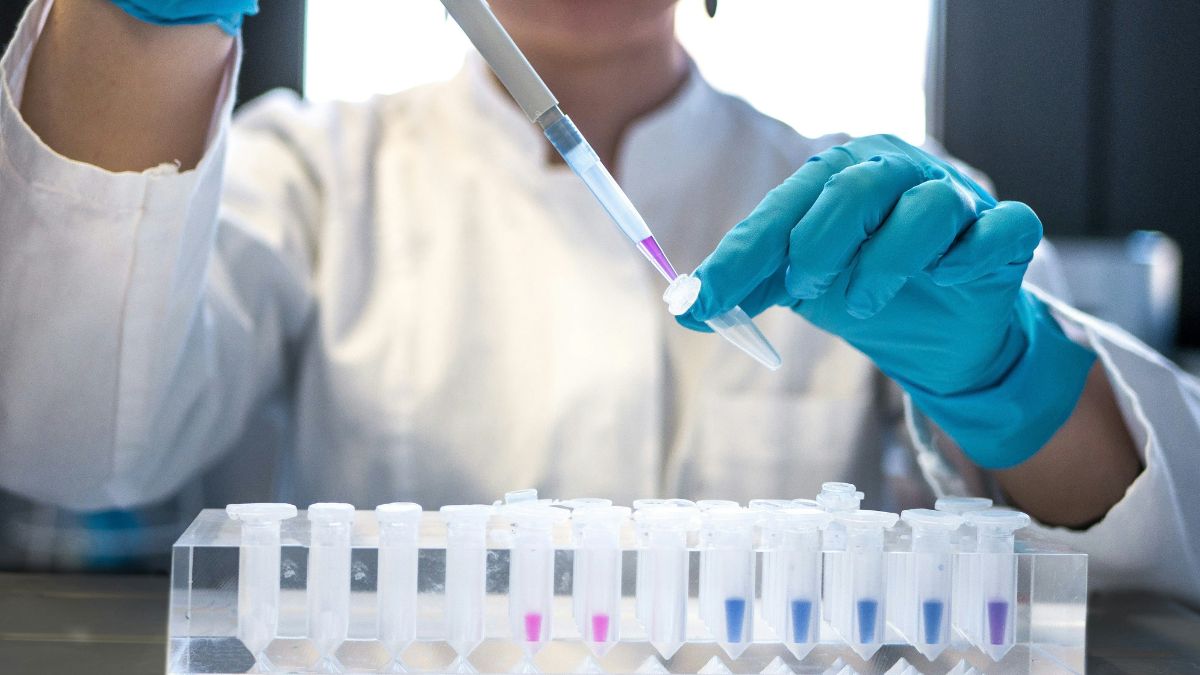
A research grade peptide is basically a tiny chain of building blocks called amino acids. Scientists build these in a lab, in a very specific order, to study how the human body works.
Now here is the thing nobody talks about enough — purity is everything.
If your research grade peptide has even a small amount of junk in it — leftover chemicals, broken pieces, contaminants — your whole experiment goes sideways. Your data means nothing. You wasted your time and money.
The number you want to see is 98% to 99%+ purity. That means out of 100 molecules in your vial, 98 to 99 are exactly what you paid for. Simple as that.
How are they made? Through a process called SPPS — think of it like building with Lego bricks, one piece at a time, using only the cleanest, highest quality parts.
Bottom line — if a supplier cannot prove their research grade peptide hits that purity mark with real lab data? It is not research grade. It is just a sticker on a vial.
Always ask for the evidence. Every single time.
Peptide Purity Standards — What the Numbers Really Mean
So how do you actually know if your research grade peptide is pure? One word — HPLC.
Think of it like a filter test. Your peptide gets pushed through a special tube at high pressure. The machine then draws a graph. One tall, clean spike on that graph? You are good. Lots of little spikes everywhere? You have got impurities. Simple.
Here is what the numbers mean in plain English:
- 95%+ — Okay for basic stuff, nothing serious
- 98%+ — The bare minimum for real research work
- 99%+ — This is what you actually want for a research grade peptide
- 99.9%+ — Top tier, for the most serious labs only
But here is what most people miss — HPLC only tells you HOW pure it is. Not WHAT it actually is.
That is where mass spectrometry (MS) comes in. It checks the weight of the molecule and confirms — yep, this is actually the compound you ordered. Not something else.
HPLC + MS together = the only combo you should trust.
And the best suppliers do not stop there. They also check for:
- Endotoxins (bacterial leftovers that mess up cell studies)
- Sterility (no bacteria or mould)
- TFA and water content
If a supplier cannot explain any of these numbers to you — run. That is your red flag right there.
Certificate of Analysis Peptides — How to Read One
A certificate of analysis (COA) is the passport for your research grade peptide. It tells you what is in the vial, who tested it, and when. Here is how to read one quickly:
- Check the source — Must come from an independent third-party lab, not the supplier’s own facility.
- Check the date — The COA must match your specific batch. Old COAs are not valid.
- Verify compound identity — Look for the compound name, CAS number, and molecular formula.
- Review the purity — Should show 98%+ or 99%+. Below 95% is a serious concern.
- Check MS data — Theoretical and observed molecular weights should match closely.
- Look for extras — Endotoxin, sterility, and TFA results show a supplier that goes beyond the minimum.
- Confirm traceability — Every COA needs a lot/batch number linked to your order.
Never buy a research grade peptide without a proper COA. Your research integrity depends on it.
BPC-157 Research — A Leading Research Grade Peptide
BPC-157 (Body Protection Compound-157) is one of the most studied research grade peptides today. It is a 15-amino acid synthetic peptide first identified in human gastric juice.
In preclinical and in-vitro studies, BPC-157 research has explored its role in:
- Cell migration and tissue signalling
- Angiogenesis (new blood vessel formation)
- Tendon and ligament biology
- Gastrointestinal signalling pathways
BPC-157 is strictly for laboratory use. It is not approved for human use by any regulatory authority. When sourcing it as a research grade peptide, require HPLC-verified purity at 99%+, MS confirmation, a third-party COA, and proper lyophilised packaging in sealed vials.
Storage and Reconstitution Best Practices
Sourcing a quality research grade peptide is only half the job. Handling it correctly is the other half.
Storage:
- Long-term: -20°C (up to 24 months)
- Short-term after reconstitution: 4°C (up to 4 weeks)
- Avoid freeze-thaw cycles — aliquot before freezing
- Keep away from light and moisture
Reconstitution:
- Use bacteriostatic water
- Add liquid slowly down the inner vial wall
- Gently swirl — never shake
- Label with peptide name, date, and batch number
Conclusion
A research grade peptide is a commitment to scientific integrity. Poor quality compounds produce poor quality data — and poor data slows down science.
Remember:
- Always demand HPLC verified peptides with batch-specific chromatograms
- Peptide purity standards of 98–99%+ are non-negotiable
- A third-party certificate of analysis is essential, not optional
- For BPC-157 research and any other compound, choose a peptide supplier UK with full transparency and a proven track record
Ask questions. Request COAs. Verify batch numbers. Every time you source a research grade peptide, make sure the evidence backs it up.
Image by Julia Koblitz from Unsplash
The editorial staff of Medical News Bulletin had no role in the preparation of this post. The views and opinions expressed in this post are those of the advertiser and do not reflect those of Medical News Bulletin. Medical News Bulletin does not accept liability for any loss or damages caused by the use of any products or services, nor do we endorse any products, services, or links in Sponsored Articles.
