

By Chris Snellgrove
| Published
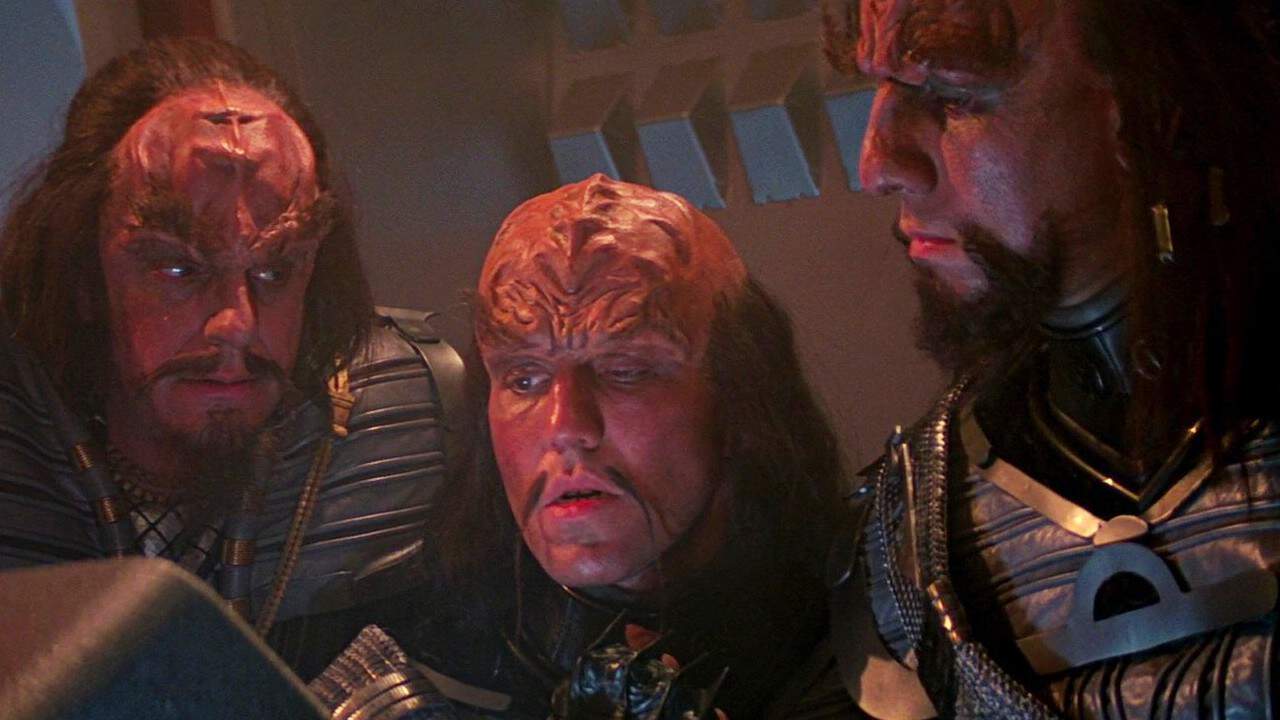
One Star Trek writer who can never get enough praise is Ronald D. Moore. An entirely different fandom fell in love with him as the showrunner of the Battlestar Galactica reboot, which many consider the best modern sci-fi show. But before he brought us tales of sexy robots and sick space battles, he cut his teeth writing for Star Trek: The Next Generation. There, he exhibited many strengths as a storyteller, but he particularly excelled at writing for the Klingons. The producers noticed this, and pretty soon, he was the one crafting every major Klingon story. This included “Reunion,” the episode where Worf’s baby mama is killed by Duras.
Duras was, of course, the man whose father betrayed Khitomer to the Romulans. Unfortunately, his house was too powerful for the truth to come out, so Worf took the fall by falsely accepting blame for his father’s supposed guilt. In “Reunion,” his existing beef with Duras, plus the man murdering the mother of his child, led Worf to kill this man in single combat. It was basically the most un-Star Trek-like ending an episode could possibly have. Because of this, Moore knew that the real challenge of writing “Reunion” was making the hippie fandom think like a Klingon and crave nothing less than the death of this traitor.
The Return Of Worf’s Baby Momma

“Reunion” is a kind of sequel to the earlier episode “Sins of the Father,” where Worf was discommendated by the Klingons because he took the fall for Duras. In this tale, the current leader of the Klingon High Council has been poisoned, and he wants Picard and crew to find out who did it. The culprit is Duras, who will stop at nothing to gain power. Along the way, he kills K’Ehleyr, a Federation ambassador. But she was also the mother to Worf’s child, giving him the legal right to challenge Duras to battle. They fight, and Worf is victorious, effectively avenging both his baby momma and his father.
If you’ve never seen “Reunion” (seriously, stop reading now and go watch it!), it’s impossible to overstate how satisfying it is when Worf kills Duras. Sure, Picard chastises our favorite grumpy Klingon, but that doesn’t matter: Worf did what needed to be done, and he did it in style. Of course, Star Trek isn’t a franchise that typically embraces violence; most stories are about solving problems through peace, diplomacy, and quick thinking. How, then, did writer Ronald D. Moore get fans into this violent Klingon mindset? Simple: by killing K’Ehleyr, who (thanks to a standout performance from Suzie Plakson) was beloved by fans and Next Generation actors like.
For Duras, It Was A Good Day To Die

According to Moore (as recorded in Captains’ Logs: The Unauthorized Complete Trek Voyages), “We love Suzie and that character, but it worked because you cared about her and we made an effort not to do it capriciously and for no reason…Anybody who watches that episode is moved and outraged by the killing of K’Ehleyr.” Because of her death, “You’re mad, and you have that same need for vengeance that Worf does. If we’ve tapped into those feelings so when Worf goes back to his quarters and grabs that sword and the audience is screaming for Duras’ head, then you’ve done it.”
In this way, Moore tapped into a rather primal part of human psychology. Most have a very firm set of ethics, and “thou shalt not kill” is at the top of the list, especially for Star Trek fans. However, the uncomfortable reality is that all those careful ethics and morals go out the window when someone you love is hurt or killed. When Duras murders K’Ehleyr, it’s hard not to wonder how you’d react if someone were to kill the mother of your own child. Just like that, blooded murder is a lot more acceptable!

Of course, Moore had the good sense to re-center the Star Trek storytelling by the end of “Reunion.” As he said, “You really had to do that scene where Picard calls Worf onto the carpet for what he did and puts it to him.” Overall, the episode of something of a narrative magic trick: it takes fans out of their comfort zone, gets them to cheer for bloody murder, and then gets us back to our regularly scheduled exploration of strange new worlds. The narrative reset was necessary, of course. But for a few minutes, it was really, really fun to think like a Klingon!
